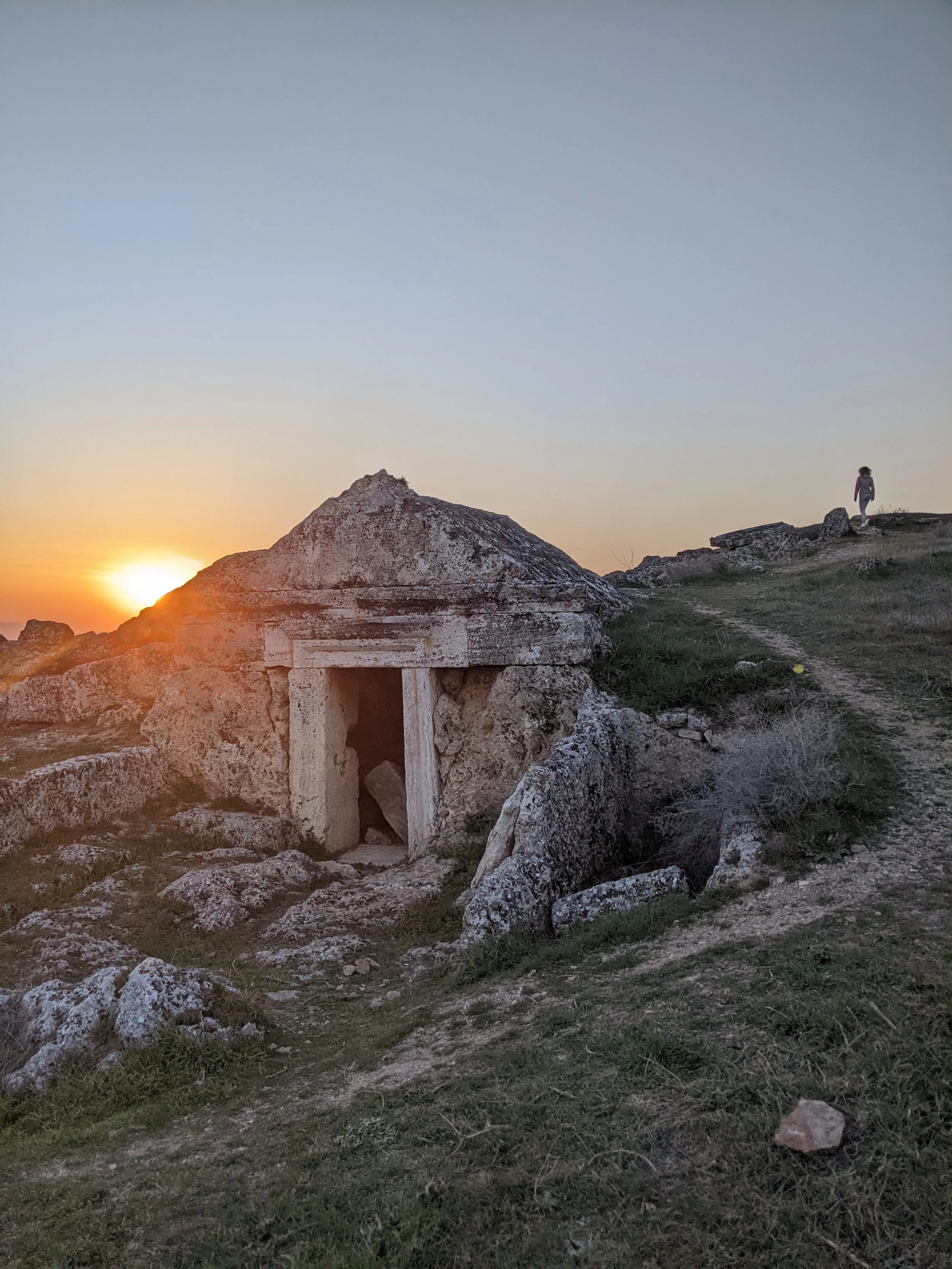
Dawn is only just beginning to break over Sapun Hill; the deep-blue surface of the sea has cast off the gloom of night, and is waiting for the first ray to begin to shine cheerfully; the bay smells of cold and fog; there is no snow - everything is black, but the sharp morning frost grabs your face and cracks under your feet, and the distant rumble of the sea, occasionally interrupted by a shot in Sebastopol, breaks the silence of the morning alone. On the ships the eighth bugle thunders deafeningly. The wind has died down, the clouds have disappeared. Pure and deep the crystal sky arches, the sun flames silently, great and sure on it. And just as still, great and sure, the star of our destiny and our days shines above the raging confusion of this spring.Tolstoy. Sevastopol Stories.
But the first philosophy, which contains the principles of the pure use of understanding, is metaphysical... Since, therefore, empirical principles are not to be found in Metaphysics, the concept of obstacles should not be sought in the senses, but in the very nature of the not-pure understanding. This understanding is not from the conception of the tried, but from the innate laws of the mind (observing its actions on the occasion of experience), and hence, it is acquired. Of this kind are concepts like possibility, existence, necessity, substance, cause, etc., along with their opposites or correlatives. These concepts never enter as parts of any sensual representation and therefore cannot in any way be abstracted from it. Everything perceived by the senses must conform to the innate laws of the mind's coordination.Kant. De mundi sensibilis atque intelligibilis forma et principiis.
Two things fill my mind with new and ever-increasing admiration and awe, the more frequently and persistently my mind is occupied with them: The starry sky above me and the moral law within me. I must not look for either of them, nor merely suppose them to be veiled in darkness or exuberance, outside my range of vision; I see them before me and connect them directly with the consciousness of my existence. The first starts from the place I occupy in the outer world of the senses, and extends the connection in which I stand into the immeasurable greatness of worlds upon worlds and systems of systems, and beyond that into the boundless times of their periodic movement, their beginning and continuation. The second starts from my invisible self, my personality, and represents me in a world that has true infinity, but is only perceptible to the mind, and with which (but also at the same time with all those visible worlds) I recognize myself, not as being there, in merely accidental, but general and necessary connection.Kant. The Critique of Practical Reason.
Nihil ergo magis praestandum est quam ne pecorum ritu sequamur antecedentium gregem, pergentes non quo eundum est sed quo itur - Nothing, then, is more to be done than that we should not follow the herd of the preceding herds in the manner of cattle, going not where we must go, but where we are going.Kant. Thoughts on the True Appreciation of Living Forces.
As a result you are already too old for fairy tales, and by the time it is printed and bound you will be older still. But someday you will be old enough to start reading fairy tales again.C.S. Lewis. The Chronicles of Narnia.
Hundreds of fresh bloodied bodies of men, two hours before, full of various, high and petty hopes and desires, with stiffened members, lay on the dewy flowered valley that separated the bastion from the trench, and on the flat floor of the Chapel of the Dead in Sevastopol; hundreds of men-with curses and prayers on their parched lips-crawled, tossing and groaning, some among the corpses in the blooming valley, others on stretchers, on bunks, and on the bloody floor of the dressing station; and, just as in former days, the twinkling stars glowed over the Sapun hill, the white mist from the roaring dark sea turned pale, the scarlet dawn blazed in the east, the long crimson clouds spread over the sky-blue horizon, and, just as in former days, promising joy, love and happiness to all the revived world, the mighty, wonderful Star came out.Tolstoy. Sevastopol Stories.
There are beings who do not ask for more; living who, having the azure of the sky, say: it is enough! dreamers absorbed in the prodigy, drawing from the idolatry of nature the indifference of good and evil, contemplators of the cosmos radiantly distracted from man, who do not understand that one takes care of the hunger of these, of the thirst of those, of the nakedness of the poor in winter, of the lymphatic curvature of a small backbone, of the hovel, of the attic, of the dungeon, and of the rags of the shivering girls, when one can dream under the trees; peaceful and terrible spirits, ruthlessly satisfied. Strange thing, the infinite is enough for them... God eclipses their soul. This is a family of spirits, both small and great. Horace was one of them, Goethe was one of them, La Fontaine perhaps; magnificent egoists of the infinite.Victor Hugo. Les Miserables.
Ich bin der Geist der stets verneint!Goethe. Faust.
Le cœur a ses raisons que la raison ne connaît pointPascal. Pensées.
Philosophy cannot do without its actual optics, metaphysics, in the long run. For the theory of truth this means the abandonment of a final metaphysical-philosophical interpretation of consciousness. In this, the value actually already lives, insofar as it is a meaningful and meaning-realizing living act, which is not remotely understood if it is neutralized into the concept of a biological blind factuality.Heidegger. Thesis on Duns Scotus.
Even if we don't know anything about philosophy, we are already in philosophy, because philosophy is in us and belongs to us, in the sense that we are always already philosophizing... The animal cannot philosophize; God does not need to philosophize. A God who philosophized would not be a God, because the essence of philosophy is to be a finite possibility of a finite being. To be human is to philosophize.Heidegger. Introduction to Philosophy.
Man is unhappy because he does not know that he is happy.Tolstoy. Path of Life.
Each one goes it alone, each one for himself. Each of us will have to stand for one hour in his life on the mystical border, where truths end and new ones can begin. Each of us must once, one moment in our life, experience in ourselves something like Myshkin - experienced, where he stood close to the execution in his clairvoyant seconds, like, and from which he emerged with Dostoevsky himself in those minutes of the Prophet.Hermann Hesse. Thoughts on Dostoevsky's The Idiot.
A man was asked: why does he know that there is a God? He replied, 'Do you need a candle to see the dawn?'Tolstoy.
Attempts to establish morality apart from religion are like children who, wanting to transplant a plant they like, tear off the root they do not like and seem to them superfluous and stick the plant into the ground without the root. There can be no real, unpretentious morality without a religious foundation, just as there can be no real plant without a root.Tolstoy.
Literature that reflects in itself the eternal, universal interests, the most dear, sincere consciousness of the people, literature accessible to a person of any people and any time, and literature, without which not a single people developed, having strength and resiliency.Tolstoy. Speech at the Society of Lovers of Russian Literature.
You can treat things without love: you can chop trees, make bricks, forge iron without love; but you cannot treat people without love, just as you cannot treat bees without caution. This is the nature of bees. If you treat them without care, you will hurt them and yourself. It is the same with people. And it cannot be otherwise, because mutual love between people is the basic law of human life. It is true that man cannot force himself to love, just as he can force himself to work, but it does not follow that one can treat people without love, especially if one demands something of them.Tolstoy. Resurrection.